


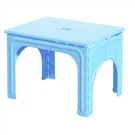


As a supplier of Baby Stool Mould, I've encountered a wide range of issues that customers face when using these moulds. Troubleshooting these problems effectively is crucial to ensure the smooth production of high - quality baby stools. In this blog, I'll share some common issues with baby stool moulds and how to troubleshoot them.
1. Surface Defects on the Baby Stool
One of the most common problems is surface defects on the baby stools produced by the mould. These defects can include scratches, pits, or uneven surfaces.
Possible Causes
- Mould Surface Damage: Over time, the surface of the mould can get scratched or damaged during the production process, such as when the stools are ejected from the mould.
- Contamination: Dirt, dust, or other contaminants can accumulate on the mould surface, which will be transferred to the baby stools during the manufacturing process.
- Incorrect Mould Temperature: If the mould temperature is too high or too low, it can affect the flow and solidification of the material, leading to surface defects.
Troubleshooting Steps
- Inspect and Polish the Mould Surface: Regularly check the mould surface for any damage. Use appropriate polishing tools to smooth out scratches and rough areas. This will help to create a better surface finish on the baby stools.
- Clean the Mould Thoroughly: Use a suitable cleaning agent to remove any contaminants from the mould surface. Make sure to clean all the corners and cavities of the mould.
- Adjust the Mould Temperature: Refer to the material specifications and the mould design to set the correct temperature. Use temperature sensors to monitor and control the temperature accurately.
2. Incomplete Filling of the Mould
Another issue that may arise is the incomplete filling of the mould, resulting in baby stools with missing parts or thin sections.


Possible Causes
- Low Injection Pressure: If the injection pressure is not high enough, the material may not be able to flow into all parts of the mould.
- Clogged Gates or Runners: Gates and runners are the channels through which the material enters the mould. If they are clogged, the material flow will be restricted.
- Incorrect Material Viscosity: The viscosity of the material can affect its flowability. If the material is too viscous, it may not fill the mould completely.
Troubleshooting Steps
- Increase the Injection Pressure: Gradually increase the injection pressure to ensure that the material can reach all parts of the mould. However, be careful not to over - pressurize, as this can cause other problems such as flash.
- Clean the Gates and Runners: Remove any debris or solidified material from the gates and runners. Use a small drill or a specialized cleaning tool to clear the blockages.
- Adjust the Material Viscosity: If the material is too viscous, you can try increasing the temperature slightly to reduce its viscosity. Make sure to follow the material manufacturer's recommendations.
3. Warping of the Baby Stools
Warping is a significant problem as it can affect the functionality and aesthetics of the baby stools.
Possible Causes
- Uneven Cooling: If the cooling process is not uniform, different parts of the baby stool will contract at different rates, leading to warping.
- Incorrect Ejection System: An improper ejection system can cause stress on the baby stools during ejection, resulting in warping.
- Mould Design Issues: The design of the mould, such as the thickness distribution of the stool, can also contribute to warping.
Troubleshooting Steps
- Improve the Cooling System: Ensure that the cooling channels in the mould are evenly distributed and that the coolant flow is consistent. You can also adjust the cooling time to achieve a more uniform cooling effect.
- Check and Adjust the Ejection System: Make sure that the ejection pins are properly positioned and that the ejection force is evenly distributed. Adjust the ejection system if necessary to minimize stress on the baby stools.
- Review and Modify the Mould Design: If the warping problem persists, it may be necessary to review the mould design. Consider adjusting the thickness distribution of the stool to reduce internal stress during cooling.
4. Flash on the Baby Stools
Flash refers to the excess material that squeezes out of the mould cavity during the injection process.
Possible Causes
- Loose Mould Clamping: If the mould is not clamped tightly enough, the material can leak out from the parting line.
- Worn - out Mould Components: Over time, the mould components, such as the parting line and the core - cavity fit, can wear out, allowing the material to escape.
- High Injection Pressure: Excessive injection pressure can force the material out of the mould cavity.
Troubleshooting Steps
- Tighten the Mould Clamping: Check the clamping force of the mould and ensure that it is sufficient to prevent material leakage. You may need to adjust the clamping mechanism or use additional clamping devices.
- Replace Worn - out Mould Components: Inspect the mould components regularly and replace any worn - out parts. This will help to maintain a proper seal between the core and the cavity.
- Reduce the Injection Pressure: If the injection pressure is too high, gradually reduce it to a level that is sufficient to fill the mould without causing flash.
5. Poor Demoulding
Difficulty in demoulding the baby stools from the mould can slow down the production process and may damage the stools.
Possible Causes
- Lack of Release Agent: Without a proper release agent, the baby stools may stick to the mould surface.
- Rough Mould Surface: A rough mould surface can increase the friction between the stool and the mould, making demoulding difficult.
- Incorrect Ejection Angle: If the ejection angle is not correct, the stools may get stuck in the mould.
Troubleshooting Steps
- Apply a Suitable Release Agent: Choose a release agent that is compatible with the material and the mould surface. Apply it evenly on the mould surface before each injection.
- Polish the Mould Surface: Smooth out the rough areas of the mould surface to reduce friction. A polished surface will make it easier to demould the baby stools.
- Adjust the Ejection Angle: Check the ejection angle and make sure it is appropriate for the design of the baby stool. You may need to modify the ejection system to ensure smooth demoulding.
In addition to the above common issues, there are also some other factors that may affect the performance of the baby stool mould. For example, the quality of the raw materials used in the production process can have a significant impact on the final product. It is important to choose high - quality materials that are suitable for the specific requirements of the baby stools.
As a supplier, we also offer a variety of other moulds, such as Pc Stool Mould and Double Color Stool Mould. These moulds are designed with high precision and can meet different production needs.
If you are facing any issues with your baby stool mould or are interested in purchasing our Baby Stool Mould, please feel free to contact us for procurement and negotiation. We have a professional team that can provide you with detailed technical support and solutions.
References
- Injection Molding Handbook, 3rd Edition by O. Osswald, T. Turng, and P. Gramann.
- Plastics Processing: Modeling and Simulation by J. A. Pearson.