


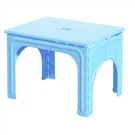


In the manufacturing industry of baby chairs, the price of a baby chair mould is a crucial factor that significantly impacts both producers and consumers. As a professional baby chair mould supplier, I have witnessed firsthand the various elements that contribute to the pricing of these essential tools. In this blog post, I will delve into the key factors that affect the price of a baby chair mould, offering insights for those interested in understanding the economics behind this specialized product.
1. Material Quality
The quality of materials used in the production of a baby chair mould is one of the primary determinants of its price. High - quality materials are essential for ensuring the durability, precision, and longevity of the mould. For instance, steel is a commonly used material for baby chair moulds due to its strength and resistance to wear. However, not all steels are created equal. Tool steels, which are specifically designed for high - precision machining and long - term use, are more expensive than standard steels.
Premium tool steels, such as H13 or P20, offer superior hardness, toughness, and heat resistance. These properties allow the mould to withstand the high pressures and temperatures involved in the injection - molding process, resulting in a higher - quality final product. As a result, moulds made from these high - grade materials tend to be more expensive. On the other hand, using lower - quality materials may lead to a cheaper initial price, but it can also result in shorter mould life, more frequent repairs, and lower - quality baby chairs.
2. Complexity of Design
The design complexity of a baby chair mould has a direct impact on its price. A simple, straightforward design with basic shapes and few details will generally cost less to manufacture than a highly intricate design. Complex designs require more advanced machining techniques, longer production times, and greater expertise from the mould - making team.
For example, a baby chair with a unique, ergonomic shape that conforms to the natural curves of a baby's body will require a more complex mould design. This may involve the use of advanced CAD/CAM technology to create a precise 3D model of the chair, followed by multi - axis machining to produce the mould. Additionally, if the chair has features such as integrated safety belts, adjustable recline positions, or decorative elements, the mould design will become even more complex, driving up the cost.
3. Production Volume
The expected production volume of baby chairs is another important factor in determining the price of the mould. Moulds can be classified into different types based on their production capacity, such as prototype moulds, low - volume production moulds, and high - volume production moulds.
Prototype moulds are typically used for testing and development purposes. They are designed to produce a small number of sample chairs quickly and at a relatively low cost. These moulds may be made from less expensive materials and use simpler manufacturing processes. As a result, the price of a prototype baby chair mould is usually lower.
Low - volume production moulds are suitable for producing a limited number of chairs, typically in the range of a few hundred to a few thousand units. These moulds need to be more durable than prototype moulds but may not require the same level of precision and longevity as high - volume production moulds. The price of low - volume production moulds is moderate.
High - volume production moulds, on the other hand, are designed to produce a large number of baby chairs over an extended period. They are made from high - quality materials and undergo rigorous quality control to ensure consistent performance. The initial investment in a high - volume production mould is higher, but the cost per chair is significantly reduced in the long run due to the large production volume.
4. Surface Finish Requirements
The surface finish of a baby chair is an important aspect of its overall quality and appearance. Different surface finishes require different manufacturing processes, which can affect the price of the mould.
A smooth, glossy surface finish is often desired for baby chairs as it gives a more professional and high - end look. Achieving this type of finish may require additional polishing and finishing operations on the mould. These processes are time - consuming and require skilled labor, increasing the cost of the mould.
On the other hand, a textured or matte surface finish may be easier and less expensive to produce. However, if the texture is complex or has specific design requirements, it may also add to the mould - making cost.
5. Mould Size
The physical size of the baby chair mould is also a factor in its pricing. Larger moulds require more material, longer machining times, and more complex handling and transportation processes. Additionally, larger moulds may require more powerful injection - molding machines to operate, which can also increase the overall cost.
For example, a mould for a large, full - sized baby high chair will be more expensive than a mould for a small, portable baby seat. The increased size of the high - chair mould means more steel is needed, and the machining operations will take longer to complete.
6. Quality Assurance and Certification
In the baby product industry, quality assurance and certification are of utmost importance. Moulds that are used to produce baby chairs need to meet strict safety and quality standards. This may involve additional testing, inspection, and certification processes, which can add to the cost of the mould.
For instance, a baby chair mould may need to be tested for dimensional accuracy, surface finish, and material properties. It may also need to comply with international safety standards such as ASTM F963 in the United States or EN 71 in Europe. Meeting these standards requires additional resources and expertise, which are reflected in the price of the mould.
7. Market Demand and Competition
The market demand for baby chair moulds and the level of competition among suppliers also play a role in determining the price. In a highly competitive market, suppliers may offer lower prices to attract customers. However, if the demand for a particular type of baby chair mould is high and the supply is limited, the price may increase.
For example, if there is a sudden trend towards a new style of baby chair with unique features, the demand for the corresponding moulds may spike. Suppliers may increase their prices to capitalize on the high demand. On the other hand, if there are many suppliers offering similar baby chair moulds, customers may be able to negotiate better prices.
Conclusion
In conclusion, the price of a baby chair mould is influenced by a variety of factors, including material quality, design complexity, production volume, surface finish requirements, mould size, quality assurance, and market conditions. As a baby chair mould supplier, I understand the importance of providing high - quality moulds at competitive prices.
If you are interested in purchasing a Baby Chair Mould, Metal Leg Chair Mould, or Pc Chair Mould, I encourage you to contact us for a detailed quote. We have a team of experienced professionals who can help you select the right mould for your specific needs and provide you with the best possible price. Let's work together to create high - quality baby chairs that meet the needs of your customers.


References
- ASTM International. (2024). ASTM F963 - 23: Standard Consumer Safety Specification for Toy Safety.
- European Committee for Standardization. (2024). EN 71 - 1:2024: Safety of Toys - Part 1: Mechanical and Physical Properties.
- Tooling U - SME. (n.d.). Understanding the Basics of Mould Making.