


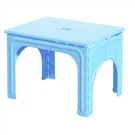


In the manufacturing industry, the production of wash tubs through injection molding is a common and efficient method. As a Wash Tub Mould [/baby-toy-mould/bath-tub-mould/wash-tub-mould.html] supplier, I am deeply involved in understanding and optimizing the injection molding parameters for these molds. This blog post aims to delve into the key injection molding parameters for a wash tub mold, providing valuable insights for both manufacturers and those interested in the process.
Temperature Parameters
Barrel Temperature
The barrel temperature is crucial as it directly affects the melting of the plastic material. Different plastic materials have different melting points. For example, if we are using polypropylene (PP), which is a commonly used material for wash tubs due to its good chemical resistance and low cost, the barrel temperature typically ranges from 180°C to 260°C. The temperature should be carefully adjusted along the length of the barrel. The feed zone near the hopper is usually set at a lower temperature to prevent premature melting and ensure smooth feeding of the plastic pellets. As the plastic moves towards the front of the barrel, the temperature gradually increases to fully melt the material.
Mold Temperature
The mold temperature also plays a significant role. A proper mold temperature helps in achieving good part quality. For a wash tub mold, a mold temperature between 30°C and 60°C is often recommended for PP. A lower mold temperature can lead to faster cooling of the plastic, which may result in shorter cycle times. However, it can also cause internal stresses in the part, leading to warping or cracking. On the other hand, a higher mold temperature allows for better flow of the plastic, reducing the risk of surface defects and improving the overall appearance of the wash tub.


Pressure Parameters
Injection Pressure
Injection pressure is used to force the molten plastic into the mold cavity. The required injection pressure for a wash tub mold depends on several factors, such as the size and complexity of the wash tub, the viscosity of the plastic material, and the flow length in the mold. For a medium - sized wash tub made of PP, the injection pressure can range from 80 MPa to 150 MPa. Higher injection pressures are needed for more complex designs or when using high - viscosity plastics. However, excessive injection pressure can cause flash (excess plastic that seeps out of the mold), damage to the mold, or even breakage of the mold components.
Holding Pressure
After the mold cavity is filled with molten plastic, holding pressure is applied to compensate for the shrinkage of the plastic as it cools. The holding pressure is usually lower than the injection pressure. For a wash tub mold, the holding pressure can be around 50% to 70% of the injection pressure. The duration of the holding pressure is also important. It should be long enough to ensure that the part maintains its shape and density, but not too long to avoid over - packing the plastic, which can lead to high internal stresses.
Speed Parameters
Injection Speed
The injection speed determines how quickly the molten plastic fills the mold cavity. A proper injection speed is essential for achieving uniform filling and good part quality. For a wash tub mold, a relatively high injection speed can be used to prevent the plastic from solidifying before the mold cavity is completely filled. However, if the injection speed is too high, it can cause air entrapment, which may result in voids or surface defects in the wash tub. A moderate injection speed, adjusted according to the specific mold design and plastic material, is often the best approach.
Cooling Parameters
Cooling Time
Cooling time is a critical parameter in injection molding. It is the time required for the plastic part to cool down to a temperature at which it can be ejected from the mold without deforming. For a wash tub made of PP, the cooling time can range from 20 seconds to 60 seconds, depending on the wall thickness of the tub. Thicker walls require longer cooling times. Efficient cooling systems, such as cooling channels in the mold, are used to reduce the cooling time and improve the production efficiency.
Screw Parameters
Screw Rotation Speed
The screw rotation speed affects the melting and mixing of the plastic material in the barrel. A higher screw rotation speed can increase the throughput of the injection molding machine, but it can also generate more heat due to friction. For a wash tub mold, a screw rotation speed between 30 rpm and 100 rpm is commonly used for PP. The speed should be adjusted to ensure that the plastic is properly melted and mixed without over - heating.
Screw Back Pressure
Screw back pressure is applied to compact the plastic in the barrel and improve the melting and mixing process. A moderate screw back pressure, typically between 2 MPa and 5 MPa, is used for wash tub injection molding. This helps in achieving a more uniform melt and better part quality.
Material - Specific Considerations
Different plastic materials have different properties, which require specific injection molding parameters. For example, if we consider using acrylonitrile butadiene styrene (ABS) for a wash tub, the barrel temperature will be higher, usually in the range of 220°C to 260°C. ABS also has a different viscosity compared to PP, which may require adjustments in injection pressure and speed.
In addition to the basic injection molding parameters, the design of the wash tub mold itself also affects the process. A well - designed mold with proper gate location, runner system, and venting can optimize the flow of the plastic and improve the part quality. For instance, the gate should be located in a position that allows for uniform filling of the mold cavity and minimizes the formation of weld lines.
As a Wash Tub Mould [/baby-toy-mould/bath-tub-mould/wash-tub-mould.html] supplier, we also offer Plastic Bath Tub Mould [/baby-toy-mould/bath-tub-mould/plastic-bath-tub-mould.html] solutions. Our expertise in understanding and optimizing these injection molding parameters allows us to provide high - quality molds that meet the specific requirements of our customers.
If you are in the market for a wash tub mold or plastic bath tub mold, and you want to ensure that you get a mold that can produce high - quality wash tubs efficiently, we are here to help. Our team of experienced engineers can work with you to customize the mold and optimize the injection molding parameters for your specific application. Whether you are a large - scale manufacturer or a small - business owner, we can provide you with the best solutions. Contact us to start a procurement negotiation and take your wash tub production to the next level.
References
- Throne, J. L. (1996). Plastics Injection Molding: Materials, Processing, and Technology. Marcel Dekker.
- Rosato, D. V., & Rosato, D. V. (2000). Injection Molding Handbook. Kluwer Academic Publishers.