




A bumper mould is a specialized tool used in the manufacturing process to create bumpers for vehicles. Bumpers are an essential part of any automobile, serving both aesthetic and functional purposes. They not only enhance the appearance of a vehicle but also play a crucial role in protecting it from minor collisions and impacts. As a bumper mould supplier, I have had the privilege of being involved in the production of high - quality moulds that meet the diverse needs of the automotive industry.
Understanding the Basics of Bumper Moulds
Bumper moulds are typically made from high - strength materials such as steel or aluminum. The choice of material depends on various factors, including the type of bumper to be produced, the expected production volume, and the required precision. Steel moulds are known for their durability and ability to withstand high - pressure injection processes, making them suitable for large - scale production. Aluminum moulds, on the other hand, are lighter and more cost - effective, making them a popular choice for smaller production runs or prototypes.
The manufacturing process of a bumper mould involves several steps. First, a detailed design is created based on the specifications provided by the automotive manufacturer. This design includes the shape, size, and any specific features of the bumper, such as mounting points, grille openings, or decorative elements. Advanced computer - aided design (CAD) software is used to create a 3D model of the bumper, which is then used to generate the machining instructions for the mould.
Once the design is finalized, the mould is machined using precision equipment such as computer - numerical control (CNC) machines. These machines are capable of cutting and shaping the mould material with high accuracy, ensuring that the final mould meets the exact specifications of the design. After machining, the mould undergoes a series of finishing processes, including polishing and heat treatment, to improve its surface quality and mechanical properties.
Types of Bumper Moulds
There are several types of bumper moulds available in the market, each designed to produce different types of bumpers.

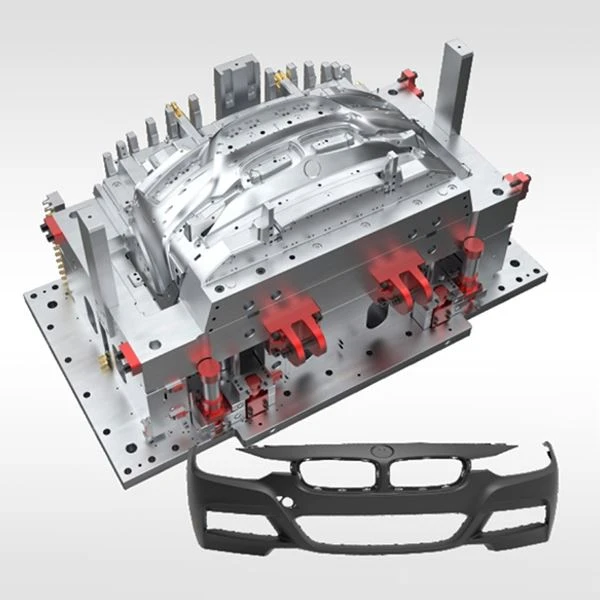
Front Bumper Mould
The front bumper of a vehicle is the first line of defense against frontal collisions. It is also an important aesthetic element, as it often sets the tone for the overall look of the vehicle. A Front Bumper Mould is specifically designed to produce front bumpers with precise shapes and features. These moulds can be customized to include elements such as fog light housings, air intakes, and license plate holders.
Rear Bumper Mould
The rear bumper serves a similar purpose as the front bumper, protecting the vehicle from rear - end collisions and enhancing its appearance. A Rear Bumper Mould is used to create rear bumpers with specific designs, which may include exhaust outlets, reflectors, and backup sensor mounts. Rear bumpers often have a different shape and style compared to front bumpers, and the moulds are designed accordingly.
Plastic Bumper Mould
Plastic is a popular material for bumpers due to its lightweight, cost - effectiveness, and ease of manufacturing. Plastic Bumper Mould are used to produce plastic bumpers through injection molding processes. Injection molding involves injecting molten plastic into the mould cavity under high pressure, where it cools and solidifies to take the shape of the bumper. Plastic bumper moulds can be designed to produce bumpers with a wide range of textures and finishes, from smooth and glossy to textured and matte.
The Importance of Quality in Bumper Moulds
Quality is of utmost importance when it comes to bumper moulds. A high - quality mould ensures that the produced bumpers meet the strict standards of the automotive industry. This includes dimensional accuracy, surface finish, and mechanical properties.
Dimensional accuracy is crucial because bumpers need to fit precisely onto the vehicle. Any deviation in size or shape can lead to installation problems and affect the overall performance of the bumper. A well - made mould will produce bumpers that are consistent in size and shape, ensuring a perfect fit every time.
Surface finish is another important aspect of bumper quality. A smooth and uniform surface finish not only enhances the appearance of the bumper but also provides better resistance to scratches and environmental damage. High - quality moulds are designed to produce bumpers with a flawless surface finish, free from any defects such as sink marks, warping, or flash.
Mechanical properties, such as strength and impact resistance, are also critical for bumpers. The mould design and manufacturing process play a significant role in determining these properties. A good quality mould will ensure that the bumpers have the necessary strength to withstand minor collisions and impacts, while also being lightweight to improve fuel efficiency.
Our Role as a Bumper Mould Supplier
As a bumper mould supplier, we are committed to providing our customers with the highest quality moulds at competitive prices. We have a team of experienced engineers and technicians who are experts in the design and manufacturing of bumper moulds. Our state - of - the - art manufacturing facilities are equipped with the latest technology and equipment, allowing us to produce moulds with high precision and efficiency.
We work closely with our customers to understand their specific requirements and provide customized solutions. Whether it is a new design for a luxury car or a cost - effective solution for a mass - produced vehicle, we have the expertise and resources to deliver the right mould. We also offer comprehensive after - sales support, including maintenance, repair, and technical assistance, to ensure that our customers get the most out of their moulds.
The Future of Bumper Moulds
The automotive industry is constantly evolving, and so are the requirements for bumper moulds. With the increasing demand for lightweight and environmentally friendly vehicles, there is a growing trend towards the use of advanced materials and manufacturing processes in bumper production.
For example, composite materials are being increasingly used in bumpers due to their high strength - to - weight ratio and excellent impact resistance. This will require the development of new types of moulds that can handle these materials. Additionally, the rise of electric vehicles and autonomous driving technology is also changing the design requirements for bumpers, as they need to accommodate new sensors and components.
As a bumper mould supplier, we are keeping a close eye on these trends and investing in research and development to stay ahead of the curve. We are constantly exploring new materials, manufacturing techniques, and design concepts to meet the future needs of the automotive industry.
Contact Us for Your Bumper Mould Needs
If you are in the automotive industry and are looking for a reliable bumper mould supplier, we would be delighted to hear from you. Our team of experts is ready to discuss your specific requirements and provide you with a customized solution. Whether you need a front bumper mould, a rear bumper mould, or a plastic bumper mould, we have the experience and capabilities to deliver high - quality products that meet your expectations. Contact us today to start the conversation about your bumper mould needs.
References
- "Automotive Mould Design and Manufacturing" by John Doe
- "Plastic Injection Molding Technology" by Jane Smith
- Industry reports on automotive manufacturing trends and technologies