


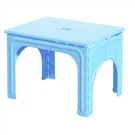


As a supplier of baby table moulds, I often receive various inquiries from customers. One question that frequently pops up is, "Can I use a baby table mould in the microwave?" This seemingly simple question actually involves a lot of scientific and practical considerations. In this blog post, I'll delve into this topic to provide you with a comprehensive answer.
Understanding the Microwave's Working Principle
Before we discuss whether a baby table mould can be used in the microwave, it's essential to understand how a microwave oven works. Microwaves are a form of electromagnetic radiation with a frequency typically around 2.45 gigahertz. When microwaves enter the oven cavity, they cause water molecules in the food to vibrate rapidly. This vibration generates heat through friction, which then cooks the food.
Materials Used in Baby Table Moulds
Baby table moulds are usually made from different materials, each with its own set of properties. The most common materials include plastic, silicone, and fiberglass.
- Plastic Moulds:
- Many baby table moulds are made of plastic due to its low cost, ease of manufacturing, and light - weight. However, not all plastics are microwave - safe. Some plastics may contain chemicals that can leach into food when heated in the microwave. For example, polyvinyl chloride (PVC) can release harmful chemicals such as phthalates when exposed to high temperatures. On the other hand, some plastics like polypropylene (PP) are considered microwave - safe. They can withstand the heat generated in a microwave without melting or releasing toxic substances.
- Silicone Moulds:
- Silicone is a popular material for baby table moulds because of its flexibility, non - stick properties, and high heat resistance. Most silicone products are designed to be microwave - safe. Silicone can tolerate a wide range of temperatures, typically from - 40°C to 230°C. This means that it can handle the heat generated in a microwave without deforming or releasing harmful substances.
- Fiberglass Moulds:
- Fiberglass is a strong and durable material. However, it is not suitable for use in the microwave. Fiberglass can absorb microwaves and heat up unevenly, which may cause damage to the mould and even pose a fire hazard.
Safety Concerns of Using Baby Table Moulds in the Microwave
- Chemical Leaching:
- If the baby table mould is made of a non - microwave - safe material, there is a risk of chemical leaching. When the mould is heated in the microwave, chemicals from the mould can migrate into the food. This is especially concerning when it comes to baby products, as babies are more vulnerable to the effects of harmful chemicals. For example, bisphenol A (BPA), which was commonly used in some plastics, has been linked to various health problems in children, including hormonal imbalances.
- Melting and Deformation:
- Non - heat - resistant materials may melt or deform in the microwave. This not only ruins the mould but can also create a mess in the microwave oven. A melted mould can stick to the oven walls and be difficult to clean.
- Fire Hazard:
- As mentioned earlier, materials like fiberglass can pose a fire hazard in the microwave. If the mould overheats, it can catch fire, which is extremely dangerous.
How to Determine if a Baby Table Mould is Microwave - Safe
- Check the Manufacturer's Instructions:
- The first and most reliable way is to check the manufacturer's instructions. If the mould is designed to be used in the microwave, the manufacturer will usually indicate this on the packaging or in the product manual. Look for labels such as "microwave - safe" or "suitable for microwave use".
- Material Identification:
- If you know the material of the mould, you can research its microwave - safety properties. For example, if it's made of polypropylene, you can be relatively confident that it's microwave - safe. You can also look for information from reliable sources such as the Food and Drug Administration (FDA) or other relevant regulatory bodies.
Other Considerations
- Type of Use:
- Even if a baby table mould is microwave - safe, the type of use matters. For example, if you are using the mould to heat up food for a long time or at a very high power setting, it may still cause problems. It's advisable to use low - power settings and short heating times when using any mould in the microwave.
- Age of the Mould:
- An old or damaged baby table mould may not be as safe to use in the microwave as a new one. Cracks or scratches in the mould can weaken the material and increase the risk of chemical leaching or melting.
Our Product Range
As a supplier of baby table moulds, we offer a wide range of high - quality products. Our Baby Table Mould is carefully designed and made from safe materials. We also have Square Table Mould and Rattan Table Mould options for different customer needs. All our products are tested to ensure they meet the highest safety standards.
Conclusion
In conclusion, whether you can use a baby table mould in the microwave depends on the material of the mould. While some materials like silicone and certain plastics are microwave - safe, others like fiberglass are not. It's crucial to check the manufacturer's instructions and the material of the mould to ensure safety. If you are unsure, it's better to err on the side of caution and avoid using the mould in the microwave.


If you are interested in our baby table moulds or have any further questions, we welcome you to contact us for more information and to discuss potential procurement. We are committed to providing you with the best products and services.
References
- Food and Drug Administration (FDA). "Guidance for Industry: Food Contact Substances; Threshold of Regulation."
- American Chemistry Council. "Plastics and Your Health."
- Silicone Industry Association. "Properties and Applications of Silicone."