

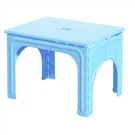


As a dedicated supplier of Wash Tub Mould, I've witnessed firsthand the pivotal role that cooling channel design plays in the efficiency and quality of wash tub production. In this blog post, I'll share some insights on how to optimize the cooling channel design of a wash tub mould, which is crucial for enhancing productivity, reducing costs, and improving the overall quality of the final product.
Understanding the Basics of Cooling in Moulds
Before delving into the optimization strategies, it's essential to understand the fundamental principles of cooling in moulds. When plastic is injected into a mould to form a wash tub, it releases a significant amount of heat. Efficient cooling is required to solidify the plastic quickly and uniformly, ensuring dimensional accuracy and minimizing internal stresses in the finished product.
The cooling process involves the transfer of heat from the plastic to the cooling medium (usually water) flowing through the cooling channels in the mould. The rate of heat transfer depends on several factors, including the temperature difference between the plastic and the cooling medium, the surface area of the cooling channels in contact with the mould, and the flow rate of the cooling medium.
Factors Affecting Cooling Channel Design
1. Mould Geometry
The shape and size of the wash tub mould have a direct impact on the cooling channel design. Complex geometries with thin walls or intricate features require a more sophisticated cooling system to ensure uniform cooling. For example, in a wash tub with a deep and narrow section, it may be necessary to use multiple cooling channels or special cooling inserts to achieve adequate cooling in that area.
2. Plastic Material
Different plastic materials have different thermal properties, such as thermal conductivity and specific heat. These properties affect the rate at which heat is transferred from the plastic to the mould and, consequently, the design of the cooling channels. For instance, plastics with high thermal conductivity require less cooling time and may allow for a simpler cooling channel design compared to plastics with low thermal conductivity.
3. Production Volume
The expected production volume also influences the cooling channel design. High - volume production requires a more efficient cooling system to minimize cycle times and increase productivity. In such cases, a larger number of cooling channels or a higher flow rate of the cooling medium may be necessary.
Optimization Strategies for Cooling Channel Design
1. Uniform Cooling Distribution
One of the primary goals of cooling channel design is to achieve uniform cooling across the entire surface of the wash tub mould. Non - uniform cooling can lead to warping, shrinkage, and other defects in the final product. To ensure uniform cooling, the cooling channels should be placed as close as possible to the mould cavity surface and distributed evenly throughout the mould.
For example, using conformal cooling channels is an effective way to achieve uniform cooling. Conformal cooling channels are designed to follow the shape of the mould cavity, providing a constant distance between the cooling channel and the plastic part. This results in a more efficient heat transfer and a more uniform temperature distribution in the mould.
2. Appropriate Channel Size and Shape
The size and shape of the cooling channels also play a crucial role in the cooling efficiency. The diameter of the cooling channels should be selected based on the required flow rate of the cooling medium and the pressure drop across the channels. A larger diameter channel generally allows for a higher flow rate but may also result in a lower velocity of the cooling medium, which can reduce the heat transfer coefficient.
In terms of shape, circular channels are commonly used due to their simplicity and ease of manufacturing. However, rectangular or oval channels may be more suitable in some cases, especially when space is limited or when a higher surface area for heat transfer is required.
3. Optimal Flow Rate and Temperature of the Cooling Medium
The flow rate and temperature of the cooling medium are important factors that affect the cooling efficiency. A higher flow rate generally leads to a more efficient heat transfer, but it also requires a more powerful pumping system and may increase the energy consumption. Therefore, an optimal flow rate should be determined based on the specific requirements of the wash tub mould.
Similarly, the temperature of the cooling medium should be carefully controlled. A lower temperature of the cooling medium can accelerate the cooling process, but it may also cause thermal shock to the mould and increase the risk of cracking. The ideal temperature of the cooling medium depends on the plastic material and the mould design.
4. Use of Cooling Inserts
In some cases, it may be necessary to use cooling inserts to enhance the cooling in specific areas of the wash tub mould. Cooling inserts are made of materials with high thermal conductivity, such as copper alloys, and can be placed in areas where additional cooling is required, such as near thick sections or hot spots in the mould.


The Role of Simulation in Cooling Channel Design
Simulation software has become an indispensable tool in the design and optimization of cooling channels for wash tub moulds. By using simulation, we can predict the temperature distribution in the mould, the cooling time, and the potential defects in the final product before the mould is manufactured.
Simulation allows us to test different cooling channel designs and parameters, such as channel size, shape, and flow rate, and select the most optimal design. This not only saves time and cost but also improves the quality of the final product.
Impact of Optimized Cooling Channel Design on Wash Tub Production
1. Reduced Cycle Time
An optimized cooling channel design can significantly reduce the cycle time of the injection moulding process. By achieving a faster and more uniform cooling, the plastic solidifies more quickly, allowing for a shorter time between each injection cycle. This leads to an increase in productivity and a reduction in production costs.
2. Improved Product Quality
Uniform cooling helps to minimize warping, shrinkage, and other defects in the wash tub. This results in a higher - quality final product with better dimensional accuracy and surface finish. Improved product quality can enhance customer satisfaction and increase the competitiveness of the product in the market.
3. Extended Mould Lifespan
Proper cooling also helps to reduce the thermal stress on the wash tub mould. By maintaining a more uniform temperature distribution in the mould, the risk of thermal fatigue and cracking is reduced, which can extend the lifespan of the mould and reduce the need for frequent mould repairs or replacements.
Conclusion
Optimizing the cooling channel design of a wash tub mould is a complex but essential task for any Wash Tub Mould supplier. By considering factors such as mould geometry, plastic material, and production volume, and implementing strategies such as uniform cooling distribution, appropriate channel size and shape, optimal flow rate and temperature of the cooling medium, and the use of cooling inserts, we can achieve a more efficient and effective cooling system.
Simulation tools can further enhance the design process by allowing us to predict and optimize the cooling performance. The benefits of an optimized cooling channel design include reduced cycle time, improved product quality, and extended mould lifespan.
If you are interested in high - quality Plastic Bath Tub Mould with optimized cooling channel design, we are here to provide you with professional solutions. Contact us for more information and let's start a fruitful business partnership!
References
- "Injection Molding Handbook" by O. Olers
- "Plastics Processing: Modeling and Simulation" by B. A. Finlayson