


Hey there! As a supplier of bumper moulds, I've seen my fair share of issues that can pop up during the manufacturing process. In this blog, I'm gonna walk you through some of the common problems with bumper moulds and how you can deal with them.
1. Surface Defects
One of the most noticeable problems with bumper moulds is surface defects. These can include things like sink marks, voids, and flow lines.
Sink Marks
Sink marks are small depressions on the surface of the bumper. They usually occur when the plastic shrinks unevenly as it cools. This can happen if the wall thickness of the bumper is not uniform or if the cooling rate is too fast. For example, if there are thick areas on the bumper, they'll cool more slowly than the thinner parts, causing the surface to sink. To fix this, you might need to adjust the gate location or the cooling system in the mould. You could also try changing the plastic material to one with better shrinkage properties.
Voids
Voids are empty spaces inside the bumper. They're often caused by improper filling of the mould cavity. If the plastic doesn't flow evenly throughout the mould, air can get trapped, creating voids. This can be due to a clogged gate, a too-low injection pressure, or a poorly designed runner system. To prevent voids, you need to make sure the gate is the right size and shape, and that the injection pressure is set correctly. You might also need to optimize the runner system to ensure smooth plastic flow.
Flow Lines
Flow lines are visible lines on the surface of the bumper that indicate the direction of plastic flow. They can make the bumper look less attractive and may also affect its structural integrity. Flow lines are usually caused by a sudden change in the flow rate of the plastic or by a temperature difference between the plastic and the mould. To reduce flow lines, you can increase the injection temperature, adjust the injection speed, or use a mould with better temperature control.
2. Dimensional Inaccuracies
Another common problem is dimensional inaccuracies. Bumpers need to fit precisely on the vehicle, so any deviation from the specified dimensions can be a big issue.
Shrinkage Variation
As mentioned earlier, plastic shrinkage is a natural process during cooling. However, if the shrinkage rate varies across different parts of the bumper, it can lead to dimensional inaccuracies. This can be caused by uneven cooling, different wall thicknesses, or variations in the plastic material. To control shrinkage variation, you need to ensure uniform cooling throughout the mould. You can use cooling channels strategically placed to maintain a consistent temperature. You should also carefully select the plastic material and make sure it has a stable shrinkage rate.
Mould Wear
Over time, the mould can wear out due to the high pressure and temperature during the injection process. This can cause the dimensions of the bumper to change. Mould wear can be accelerated by abrasive plastic materials, improper maintenance, or a high production volume. To prevent mould wear, you need to use high-quality mould materials, perform regular maintenance, and clean the mould after each production run. You might also need to replace worn-out parts of the mould to ensure accurate dimensions.
3. Ejection Problems
Getting the bumper out of the mould smoothly is crucial. If there are ejection problems, it can damage the bumper or the mould.
Sticking
Sticking occurs when the bumper adheres to the mould cavity or the core. This can be due to a rough surface finish on the mould, a lack of proper lubrication, or a high friction coefficient between the plastic and the mould. To prevent sticking, you can use a mould release agent, polish the mould surface to a smooth finish, or modify the mould design to reduce the contact area between the bumper and the mould.
Deformation
Sometimes, the bumper can get deformed during ejection. This can happen if the ejection force is too high or if the ejection pins are not properly placed. If the ejection force is too strong, it can cause the bumper to bend or crack. To avoid deformation, you need to calculate the correct ejection force and place the ejection pins in the right locations. You might also need to use a more gentle ejection mechanism, such as a hydraulic or pneumatic system.
4. Gate Marks
The gate is the opening through which the plastic enters the mould cavity. Gate marks are the remnants left on the bumper after the plastic has been cut off at the gate.
Large or Visible Gate Marks
Large or visible gate marks can make the bumper look unprofessional. They can be caused by a large gate size or improper gate cutting. To reduce gate marks, you can use a smaller gate size or a more advanced gate-cutting method, such as hot runner systems. Hot runner systems allow for precise control of the plastic flow and can minimize gate marks.
Gate Residue
Gate residue is the remaining plastic at the gate area. It can be difficult to remove and can affect the appearance and functionality of the bumper. To prevent gate residue, you need to ensure proper gate design and clean the gate area regularly. You might also need to adjust the injection parameters to ensure complete filling and proper solidification at the gate.
Solutions and Where to Find Quality Bumper Moulds
Now that we've covered the common problems, let's talk about solutions. If you're facing any of these issues, it's important to work with an experienced bumper mould supplier. At our company, we have the expertise and technology to design and manufacture high-quality Plastic Bumper Mould, Front Bumper Mould, and Rear Bumper Mould.
We use advanced CAD/CAM technology to design the moulds, ensuring precise dimensions and optimal plastic flow. Our moulds are made from high-quality materials and undergo strict quality control to minimize the risk of problems. We also offer after-sales support to help you troubleshoot any issues that may arise.
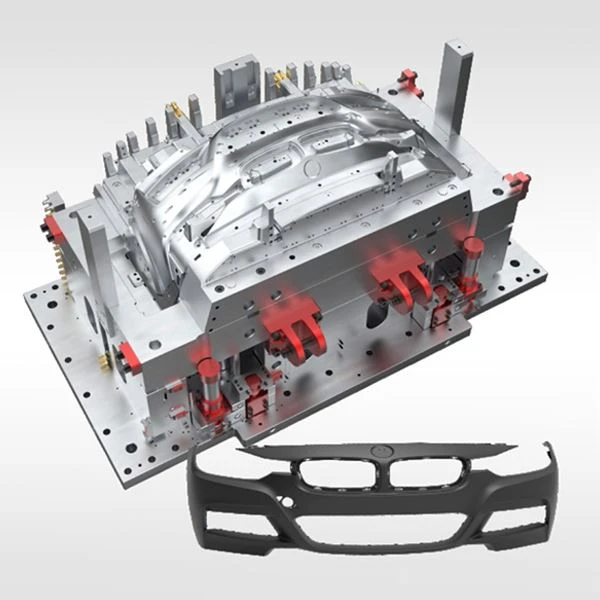

If you're in the market for bumper moulds, don't hesitate to reach out to us. We can provide you with customized solutions based on your specific requirements. Whether you need a small batch of prototype moulds or a large production run, we've got you covered.
References
- "Plastic Injection Molding Handbook" by O. Osswald and T. Turng
- "Mould Design for Plastic Products" by J. Beaumont
- Industry research reports on automotive bumper manufacturing