

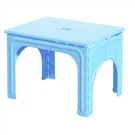


As a supplier of stool moulds, I've witnessed firsthand how environmental factors can have a significant impact on these essential tools in the manufacturing process. Stool moulds are used to create a wide variety of stools, from simple plastic ones to more complex double - colored or baby stools. In this blog, I'll explore the various environmental factors that can affect a stool mould and why it's crucial for manufacturers to be aware of them.
Temperature
Temperature is one of the most critical environmental factors affecting stool moulds. Extreme temperatures can cause the mould material to expand or contract, leading to dimensional changes. For instance, in high - temperature environments, the metal used in stool moulds may expand. This expansion can result in the mould cavity becoming larger than the intended size, leading to stools that are out of specification. On the other hand, in cold temperatures, the mould material contracts. This contraction can cause cracks in the mould, especially if the material is brittle.
Moreover, temperature also affects the curing process of the materials used to make stools. For example, if the ambient temperature is too low during the injection molding process, the plastic may not flow properly into the mould cavity, resulting in incomplete filling and defective stools. Conversely, high temperatures can cause the plastic to degrade, leading to a loss of mechanical properties in the final product. As a supplier of Double Color Stool Mould, I often advise my clients to maintain a stable temperature in their manufacturing facilities to ensure the quality of both the mould and the stools produced.
Humidity
Humidity is another environmental factor that can have a profound impact on stool moulds. High humidity levels can lead to corrosion of the mould surface, especially if the mould is made of metal. Corrosion can cause pitting and roughness on the mould surface, which in turn can affect the surface finish of the stools. For example, if a Baby Stool Mould is corroded, the baby stools produced may have a rough or uneven surface, which is not only aesthetically unappealing but also potentially dangerous for the baby.


In addition, humidity can also affect the moisture content of the materials used in the moulding process. For example, if the plastic pellets absorb too much moisture from the air, it can cause bubbles or voids in the final stool product. This is because the moisture turns into steam during the high - temperature injection molding process, creating imperfections in the stool. To mitigate the effects of humidity, manufacturers should store their moulds in a dry environment and use dehumidifiers in their manufacturing facilities if necessary.
Chemical Exposure
Stool moulds can be exposed to various chemicals during the manufacturing process, and these chemicals can have a detrimental effect on the mould. For example, cleaning agents used to clean the mould can be corrosive if not properly selected. Some strong acids or alkalis can etch the mould surface, reducing its lifespan. In addition, the plastic materials used to make stools may contain additives or by - products that can react with the mould material over time.
Furthermore, if the manufacturing environment is contaminated with chemicals such as solvents or gases, it can also affect the mould. For instance, certain solvents can dissolve the surface layer of the mould, leading to a loss of precision. As a supplier, I always recommend my clients to use mild, non - corrosive cleaning agents and to ensure proper ventilation in their manufacturing facilities to minimize chemical exposure.
Dust and Particulates
Dust and particulates in the manufacturing environment can also cause problems for stool moulds. These particles can accumulate on the mould surface, especially in the small crevices and cavities. Over time, this accumulation can lead to blockages in the mould, preventing the proper flow of plastic during the injection molding process. This can result in defective stools with incomplete features or poor surface finish.
In addition, if the dust contains abrasive particles, it can scratch the mould surface during the moulding process. These scratches can act as stress concentrators, increasing the likelihood of crack formation in the mould. To prevent dust and particulate contamination, manufacturers should keep their manufacturing facilities clean and use air filtration systems to remove airborne particles.
Mechanical Vibration
Mechanical vibration in the manufacturing environment can have a negative impact on stool moulds. Continuous vibration can cause the mould to loosen from its mounting, leading to misalignment. This misalignment can result in stools that are not properly formed, with uneven walls or incorrect dimensions.
Moreover, vibration can also cause fatigue in the mould material. Over time, the repeated stress from vibration can lead to crack initiation and propagation in the mould. This is especially true for moulds that are subjected to high - speed injection molding processes, where the vibration levels can be relatively high. To reduce the effects of mechanical vibration, manufacturers should ensure that their moulds are properly mounted and use vibration - damping materials if necessary.
UV Radiation
Although not as common in an indoor manufacturing environment, UV radiation can still affect stool moulds, especially if they are stored outdoors or in areas with exposure to sunlight. UV radiation can cause the surface of the mould to degrade, leading to a loss of gloss and a change in color. This degradation can also make the mould more susceptible to corrosion and other forms of damage.
For example, if a Folding Table Mould is exposed to UV radiation for an extended period, the surface finish may become dull and rough. To protect the moulds from UV radiation, they should be stored in a shaded area or covered with UV - resistant materials.
Conclusion
In conclusion, environmental factors such as temperature, humidity, chemical exposure, dust and particulates, mechanical vibration, and UV radiation can all have a significant impact on stool moulds. As a supplier of high - quality stool moulds, I understand the importance of these factors and always strive to provide my clients with the best advice on how to protect their moulds.
Maintaining a stable manufacturing environment is crucial for ensuring the longevity and performance of stool moulds. By controlling these environmental factors, manufacturers can produce high - quality stools consistently, reducing waste and improving their bottom line.
If you are in the market for high - quality stool moulds or need advice on how to protect your existing moulds from environmental factors, please feel free to contact me for a procurement discussion. I'm always ready to help you find the best solutions for your manufacturing needs.
References
- "Plastic Injection Molding Handbook" by O. Olabisi
- "Manufacturing Engineering and Technology" by S. Kalpakjian and S. Schmid
- "Corrosion and Protection of Metals" by J. W. Lyons