


Hey there! As a bumper mould supplier, I've been in the game for quite some time, and I often get asked about the precision requirements for a bumper mould. So, I thought I'd share my insights on this topic.
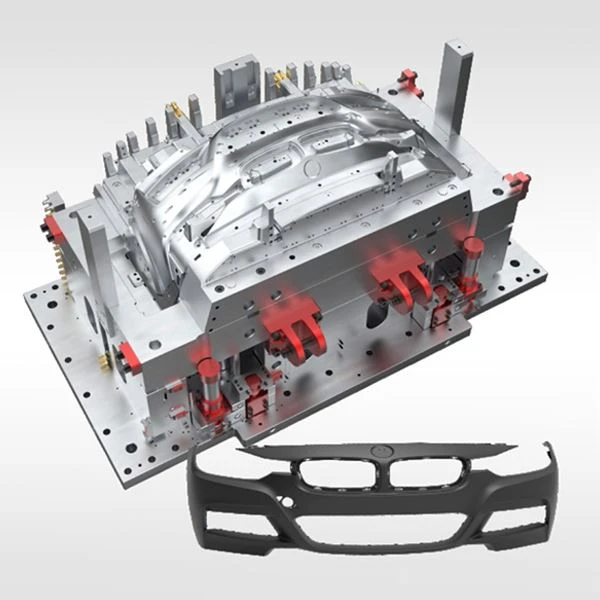
Let's start by understanding what a bumper mould is. A bumper mould is a crucial tool used in the automotive industry to manufacture bumpers. Bumpers are not just aesthetic elements of a vehicle; they play a vital role in protecting the car and its passengers in case of a collision. That's why the precision of the bumper mould is of utmost importance.
Dimensional Precision
One of the most critical precision requirements for a bumper mould is dimensional accuracy. The bumper needs to fit perfectly onto the vehicle, which means the mould has to be made with extremely tight tolerances. For example, the length, width, and height of the bumper must match the vehicle's design specifications exactly. Even a small deviation can lead to problems during the assembly process, such as gaps between the bumper and the body of the car or misalignment of the mounting points.
In most cases, the dimensional tolerance for a bumper mould is within ±0.1 mm to ±0.5 mm, depending on the complexity of the design and the specific requirements of the vehicle manufacturer. This high level of precision ensures that the bumpers produced are consistent in size and shape, which is essential for mass production.
Surface Finish Precision
The surface finish of a bumper is another aspect where precision is key. A smooth and flawless surface not only enhances the appearance of the vehicle but also affects its aerodynamics. The mould has to be polished to a high degree to achieve the desired surface finish on the bumper.
For a Class A surface finish, which is typically required for visible parts of the vehicle, the surface roughness (Ra) should be less than 0.05 µm. This requires advanced machining and polishing techniques to ensure that the surface of the mould is free from any scratches, pits, or other defects.
Geometric Precision
Geometric precision refers to the accuracy of the shape and form of the bumper. Bumpers often have complex geometries, including curves, angles, and contours, which need to be replicated precisely in the mould. Any deviation in the geometry can affect the fit and function of the bumper.
For example, the curvature of the bumper must match the body of the vehicle to ensure a seamless integration. Additionally, the mounting holes and other features on the bumper need to be located accurately to allow for proper installation. To achieve this level of geometric precision, computer-aided design (CAD) and computer-aided manufacturing (CAM) technologies are used to create the mould.
Material Precision
The choice of material for the bumper mould is also an important factor in determining its precision. High-quality materials, such as tool steel, are commonly used because they offer excellent strength, hardness, and wear resistance. These properties ensure that the mould can withstand the high pressures and temperatures involved in the injection moulding process without deforming or wearing out.
The material also needs to have good thermal conductivity to facilitate the cooling process, which affects the cycle time and the quality of the final product. Additionally, the material should be free from any internal defects, such as porosity or inclusions, which can compromise the precision of the mould.

Tolerance Stack - up
When designing a bumper mould, it's important to consider the tolerance stack - up. This refers to the cumulative effect of all the tolerances in the manufacturing process, including the tolerances of the mould components, the injection moulding process, and the assembly of the bumper onto the vehicle.
By carefully managing the tolerance stack - up, we can ensure that the final product meets the required specifications. This may involve adjusting the tolerances of individual components or using compensation techniques to minimize the impact of tolerance variations.
Importance of Precision in Bumper Moulds
The high precision requirements for bumper moulds are not just for aesthetic reasons. They have a significant impact on the safety, performance, and cost - effectiveness of the automotive manufacturing process.
- Safety: A precisely manufactured bumper provides better protection in case of a collision. It fits correctly onto the vehicle and can absorb and distribute the impact energy effectively, reducing the risk of injury to the passengers.
- Performance: A well - fitting bumper improves the aerodynamics of the vehicle, which can lead to better fuel efficiency and handling.
- Cost - effectiveness: High - precision moulds produce consistent and high - quality bumpers, which reduces the number of rejected parts and the need for rework. This, in turn, lowers the production costs and improves the overall efficiency of the manufacturing process.
Our Offerings
As a bumper mould supplier, we understand the importance of precision in every aspect of bumper mould manufacturing. We use state - of - the - art equipment and advanced manufacturing processes to ensure that our moulds meet the highest precision requirements.
We offer a wide range of bumper moulds, including Rear Bumper Mould, Front Bumper Mould, and Plastic Bumper Mould. Our team of experienced engineers and technicians works closely with our customers to understand their specific needs and develop customized solutions.
If you're in the market for high - precision bumper moulds, we'd love to hear from you. Whether you're an automotive manufacturer or a supplier, we can provide you with the quality and precision you need for your bumper production. Contact us today to start a conversation about your requirements and how we can help you achieve your goals.
References
- Automotive Industry Standards for Bumper Manufacturing
- Injection Moulding Handbook
- Precision Machining Techniques for Tooling