


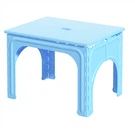
As a table mould supplier, ensuring the quality of our products is of utmost importance. A high - quality table mould not only guarantees the production of well - formed tables but also contributes to the efficiency and cost - effectiveness of the manufacturing process. In this blog, I will share some key methods on how to test the quality of a table mould.
I. Visual Inspection
Visual inspection is the first and most straightforward step in testing the quality of a table mould. It can quickly identify obvious defects.
A. Surface Finish
A smooth surface finish is crucial for a table mould. Any scratches, dents, or unevenness on the mould surface can transfer to the final table product, affecting its appearance. When inspecting, use a bright light source to illuminate the mould. Look for areas where the light reflects unevenly, which may indicate surface imperfections. For example, if there are rough patches on a Rattan Table Mould, the rattan - like texture of the final table may not be well - reproduced.
B. Dimensions
Accurate dimensions are essential for a table mould. Measure the key dimensions of the mould using precision measuring tools such as calipers and micrometers. Compare the measured values with the design specifications. Even a small deviation in dimensions can lead to problems during the table production process. For instance, if a Square Table Mould has incorrect side lengths, the resulting square tables may not fit together properly or may not meet the market requirements.
C. Alignment
Check the alignment of different parts of the mould. If it is a multi - piece mould, ensure that the pieces fit together precisely. Misaligned parts can cause gaps or uneven seams in the table product. For example, in a complex Baby Table Mould with multiple components, improper alignment can lead to a wobbly or misshapen baby table.
II. Material Testing
The material of the table mould has a significant impact on its quality and performance.
A. Hardness Testing
Hardness is an important property of the mould material. A mould with appropriate hardness can withstand the pressure and wear during the table - making process. Use a hardness tester, such as a Rockwell or Brinell hardness tester, to measure the hardness of the mould material. Different materials have different recommended hardness ranges. For example, steel moulds usually require a certain level of hardness to resist deformation and abrasion.
B. Chemical Composition Analysis
Analyzing the chemical composition of the mould material can help ensure its quality. Use techniques such as spectroscopy to determine the elements present in the material. A correct chemical composition is necessary for the material to have the desired mechanical properties. For example, if the steel used in a table mould contains too much sulfur, it can reduce the material's toughness and increase the risk of cracking.
C. Density Testing
Density testing can also provide information about the quality of the mould material. A consistent density indicates a homogeneous material. Use a density meter to measure the density of the mould. Deviations from the expected density may suggest internal defects or improper material processing.
III. Functional Testing
Functional testing is used to evaluate how well the table mould performs in the actual production process.
A. Mould Filling Test
This test assesses how well the molten material fills the mould cavity. Inject a test material, such as a low - cost plastic or resin, into the mould under normal production conditions. Observe the filling process. If there are areas that are not filled properly, it may indicate problems with the mould design, such as narrow channels or air traps. For example, in a Rattan Table Mould, incomplete filling can result in missing or distorted rattan patterns on the table.
B. Ejection Test
The ability to eject the finished table from the mould smoothly is crucial. After the test material has solidified, attempt to eject the table from the mould. A well - designed mould should allow for easy ejection without causing damage to the table or the mould. If the ejection is difficult, it may be due to factors such as excessive friction, improper draft angles, or sticking of the material to the mould surface.
C. Cycle Time Test
Measure the time it takes to complete one production cycle, including the injection, cooling, and ejection steps. A shorter cycle time indicates higher production efficiency. However, it should not be achieved at the expense of product quality. If the cycle time is too short, the table may not be fully formed or may have internal stresses. Compare the measured cycle time with the expected value based on the mould design and the material properties.


IV. Durability Testing
Durability is an important aspect of a table mould's quality, as it determines the mould's lifespan and cost - effectiveness.
A. Fatigue Testing
Subject the mould to repeated cycles of injection and ejection to simulate long - term use. Monitor the mould for signs of fatigue, such as cracks or deformation. Fatigue testing can help identify potential weaknesses in the mould design or material. For example, if a Square Table Mould shows signs of cracking after a relatively small number of cycles, it may need to be redesigned or made from a more durable material.
B. Corrosion Resistance Testing
If the table mould is exposed to corrosive environments, such as in outdoor table production, test its corrosion resistance. Immerse a sample of the mould material in a corrosive solution for a certain period and observe the changes in its surface. A high - quality mould should have good corrosion resistance to ensure its long - term performance.
C. Abrasion Resistance Testing
Use an abrasion testing machine to simulate the wear and tear that the mould may experience during the production process. Measure the amount of material loss due to abrasion. A mould with high abrasion resistance will maintain its surface finish and dimensions over a longer period.
V. Conclusion
Testing the quality of a table mould is a comprehensive process that involves visual inspection, material testing, functional testing, and durability testing. By using these methods, we can ensure that our table moulds meet the highest standards of quality. As a table mould supplier, we are committed to providing our customers with high - quality products. If you are interested in purchasing our table moulds or have any questions about their quality, please feel free to contact us for further discussion and negotiation.
References
- "Mould Design and Manufacturing Handbook"
- "Materials Science for Mould Engineering"
- "Plastic Injection Moulding Technology"