Fundamental Principles of Injection Molding
The injection molding process is a continuous cycle that transforms raw plastic pellets into finished parts. The core cycle consists of five main stages:
- Melting (Plasticizing): Plastic pellets are fed into the heated barrel, where the combination of heater bands and the shearing action of the rotating screw melts the material into a homogeneous state.
- Injection: The screw acts as a plunger, pushing the molten plastic at high speed and pressure through the nozzle and into the closed mold cavity.
- Packing & Holding: After the cavity is filled, additional pressure is applied to pack more material into the mold to compensate for volumetric shrinkage as the plastic cools.
- Cooling: The molten plastic inside the mold solidifies. Cooling time typically accounts for the majority of the total cycle time.
- Ejection: The mold opens, and an ejection system pushes the solidified part out of the cavity, preparing the mold for the next cycle.
Core Mold Structure
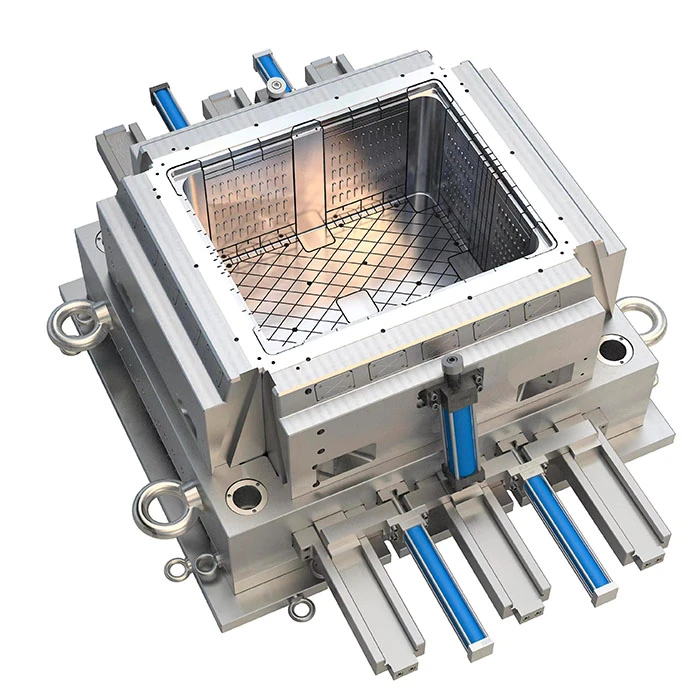
An injection mold is a highly precise mechanical tool, generally consisting of the following critical systems:
- Gating System: This includes the sprue, runners, and gates. It acts as the pathway that guides the molten plastic from the injection machine's nozzle into the mold cavity.
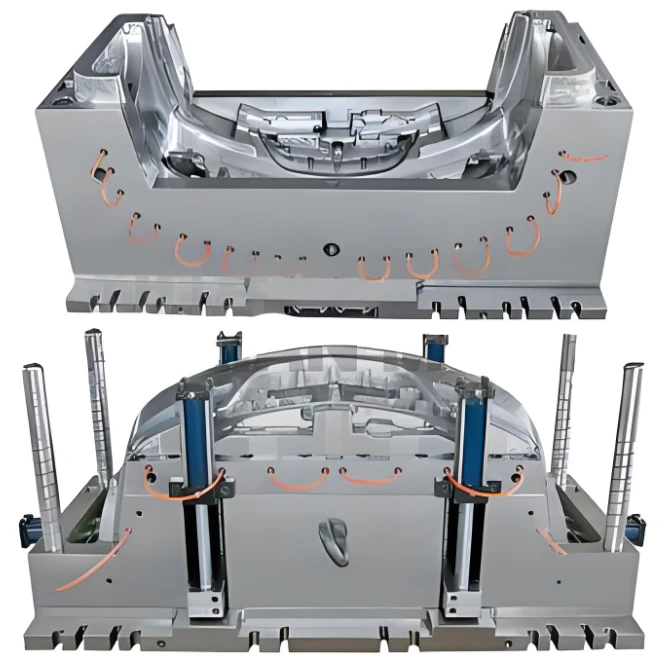
- Cooling System: A network of internal cooling channels (water lines) machined into the mold plates. Its purpose is to circulate coolant to absorb heat, ensuring rapid and uniform cooling to minimize cycle time and prevent warpage.
- Forming Components:
Cavity: The hollowed-out section that forms the outer surface of the part (typically on the stationary side).
Core: The protruding section that forms the inner surface of the part (typically on the moving side).
Inserts: Replaceable components used to form specific features or to simplify machining and maintenance.
- Ejection System: Mechanisms designed to safely remove the part from the mold. Common types include ejector pins, stripper plates, air poppets, and hydraulic cylinders for complex geometries.
- Guiding & Supporting System: Components like guide pins (leader pins) and bushings ensure the precise alignment of the stationary and moving mold halves during closing. Support pillars are used to withstand the immense injection pressure and prevent mold deflection.