

1, Casting
Casting is a production method that molten metal is poured into the cavity of the mold, cooled and solidified to obtain products. In the process of automobile manufacturing, there are many parts made of cast iron, which account for about 10% of the weight of the whole vehicle, such as air cylinder, transmission box, steering gear housing, rear axle housing, brake drum, various supports, etc. Sand mold is usually used to make iron castings. The raw material of sand mold is mainly sand, mixed with binder, water, etc. Sand mold material must have a certain adhesive strength, so that it can be molded into the required shape and can resist the erosion of hot metal without collapse. In order to form a cavity in the sand mold that matches the shape of the casting, a mold must first be made of wood, called a wood mold. The volume of hot molten iron will shrink after cooling. Therefore, the size of the wooden mold needs to be increased according to the shrinkage rate on the basis of the original size of the casting, and the surface that needs to be machined should be thickened accordingly. Hollow castings need to be made into sand cores and corresponding core wood molds (core boxes). With the wooden mold, the cavity sand mold can be reproduced (casting is also called "sand turning"). When making sand mold, it is necessary to consider how to separate the upper and lower sand boxes to take out the wood mold, where the molten iron flows in, and how to fill the cavity to obtain high-quality castings. After the sand mold is made, it can be poured, that is, molten iron is poured into the cavity of the sand mold. During pouring, the temperature of molten iron is 1250-1350 ℃, and it is higher during smelting.
2, Forging
Forging is widely used in automobile manufacturing. Forging is divided into free forging and model forging. Free forging is a processing method that the metal blank is formed by putting it on an anvil to withstand impact or pressure (called "forging" in the street). The blanks of automobile gears and shafts are processed by free forging. Die forging is a processing method that metal blanks are placed in the die chamber of the forging die and formed under impact or pressure. Model forging is somewhat like the process in which dough is pressed into the shape of biscuits in a mold. Compared with free forging, the shape of the workpiece produced by die forging is more complex and the size is more accurate. Typical examples of die forgings for automobiles are: engine connecting rod and crankshaft, automobile front axle, steering knuckle, etc.
3, Cold stamping
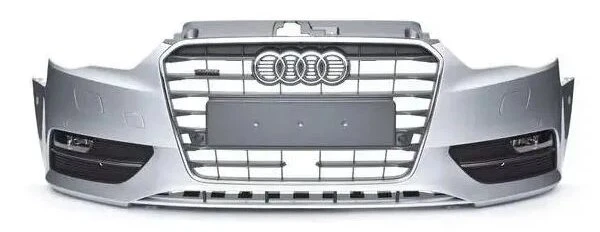
Cold stamping or sheet metal stamping is a processing method that enables metal sheets to be cut or formed under pressure in the stamping die. Daily necessities, such as female aluminum pots, lunch boxes and washbasins, are made by cold stamping. For example, to make a lunch box, first you need to cut a rectangular blank with four fillets (experts call it "blanking"), and then use a punch to press this blank into a female die to form (experts call it "drawing"). In the drawing process, the flat sheet metal becomes a box, with four edges vertically bent upward, and the materials at four corners are piled up and wrinkles can be seen. The automobile parts processed by cold stamping are: engine oil pan, brake base plate, automobile frame and most body parts. These parts are generally formed through blanking, punching, drawing, bending, flanging, trimming and other processes. In order to make cold stamping parts, a die must be prepared. The die is usually divided into two pieces, one of which is installed above the press and can slide up and down, and the other is installed below the press and fixed. During production, the blank is placed between two stamping dies. When the upper and lower dies are closed, the stamping process is completed. The productivity of stamping is very high, and parts with complex shape and high precision can be manufactured.
4, Welding
Welding is a processing method of joining two pieces of metal by local heating or simultaneously heating and pressurizing. We often see workers holding masks in one hand and welding tongs and electrodes connected to electric wires in the other hand. The welding method is called manual arc welding, which uses high temperature melting electrodes and weldments produced by arc discharge to make them join. Manual arc welding is seldom used in automobile manufacturing. Spot welding is the most widely used in automobile body manufacturing. Spot welding is suitable for welding thin steel plates. During the operation, two electrodes apply pressure to two steel plates to make them stick together, and at the same time, the bonding point (a circle with a diameter of 5-6 甽) is heated by current to melt so as to firmly joint. When two body parts are welded, one point shall be welded every 50-100 甽甽甽甽甽 at their edges to form a discontinuous multi-point connection. Welding the whole car body usually requires thousands of welding points. The strength of welding points is required to be very high. Each welding point can withstand a tensile force of 5kN, even tear the steel plate, and still can not separate the welding points. The common gas welding in the repair workshop is to use acetylene combustion and oxygen combustion to generate high temperature flame, so that the welding rod and weldment can be melted and joined. This kind of high temperature flame can also be used to cut the metal, which is called gas cutting. The application of gas welding and gas cutting is flexible, but the heat affected zone of gas welding is large, resulting in deformation and metallographic structure change of weldments, and performance degradation. Therefore, gas welding is rarely used in automobile manufacturing.
5, Metal cutting
Metal cutting is to cut metal blanks layer by layer with cutting tools; The processing method to obtain the required shape, size and surface roughness of the workpiece. Metal cutting includes two methods: bench worker and mechanical processing. Bench worker is a processing method that workers use hand tools to cut. It is flexible and convenient to operate, and is widely used in assembly and repair. Machining is accomplished by means of machine tools, including turning, planing, milling, drilling and grinding.
1) Turning: Turning is the process of machining workpieces with turning tools on a lathe. The lathe is suitable for cutting various rotating surfaces, such as inner and outer cylinders or cones, and can also turn end faces. Many shaft parts and gear blanks of automobiles are processed on lathes.
2) Planing: Planing is the process of processing workpieces with a planer. Planers are suitable for machining horizontal, vertical, inclined and grooved surfaces. The mating surfaces of the cylinder block and the cylinder head, the transmission case and the cover are all machined with a planer.
3) Milling: Milling is the process of machining the workpiece with a milling cutter on a milling machine. Milling machine can process bevel, groove, and even gear and curved surface, and other old milling is widely used to process various automotive parts. Cold stamping dies for automobile body are all milled. CNC milling machine controlled by computer can process workpieces with complex shapes, and is the main machine tool for modern machining.
4) Drilling and boring: drilling and boring are the main cutting methods for machining holes.
5) Grinding: Grinding is the process of machining workpiece with grinding wheel on the grinder. Grinding is a finishing method, which can obtain workpieces with high precision and roughness, and can grind workpieces with high hardness. Some automobile parts after heat treatment are finished with grinding machines.

6, Heat treatment
Heat treatment refers to the method of reheating, holding or cooling the solid steel to change its structure to meet the use requirements or process requirements of parts. The heating temperature, holding time and cooling speed can make the steel produce different structural changes. The blacksmith immerses the heated steel in water for rapid cooling (experts call it quenching), which can improve the hardness of the steel. This is an example of heat treatment. Heat treatment process includes annealing, normalizing, quenching and tempering. Annealing is to heat the steel parts, keep them warm for a certain time, and then slowly cool them together with the furnace to obtain a fine and uniform structure, reduce the hardness, and facilitate cutting. Normalizing is to heat the steel parts, take them out of the furnace after heat preservation, and then cool them in the air, which is suitable for refining low-carbon steel. Quenching is to heat steel parts, cool them quickly in water or oil after heat preservation to improve hardness. Tempering is usually the subsequent process of quenching. The quenched steel is reheated and cooled after heat preservation to stabilize the structure and eliminate brittleness. In order to retain the toughness of the core and change the surface structure to improve the hardness of many automotive parts, high frequency surface quenching or carburizing, cyaniding and other heat treatment processes are required.
7, Assembly
Assembly is to connect and combine all components into parts through connecting pieces (bolts, nuts, pins or clips, etc.) according to certain requirements, and then connect and combine all components into a whole vehicle. Whether the parts are combined into parts or the parts are combined into a whole vehicle, they must meet the mutual cooperation relationship specified in the design drawings to make the parts or the whole vehicle reach the predetermined performance. For example, when assembling the transmission to the clutch housing, the centerline of the transmission input shaft must be aligned with the centerline of the engine crankshaft. This centering method is not adjusted by the assembler (assembler) in the assembly process, but is guaranteed by design and manufacturing. If you visit an automobile factory, the most attractive thing is the assembly line. On this assembly line, we drive a car every few minutes. Take FAW Jiefang truck assembly line as an example. This assembly line is a 165m long conveyor chain. The lift car moves to each station along with the conveyor chain and is gradually assembled. There is a transmission chain around, which can continuously transfer the engine assembly, cab assembly, wheel assembly, etc. from each workshop to the corresponding station on the assembly line. At the beginning of the transmission chain, first place the frame (with the bottom facing up), then install the rear axle assembly (including the leaf spring and wheel hub) and the front axle assembly (including the leaf spring, steering knuckle and wheel hub) on the frame, then turn the frame over to install the steering gear, air reservoir and brake pipe, oil tank and oil pipe, wires and wheels, and finally install the engine assembly (including the clutch transmission and central brake), and connect the transmission shaft, Then install the cab and the front panel. At this point, the car can drive away from the assembly line.


